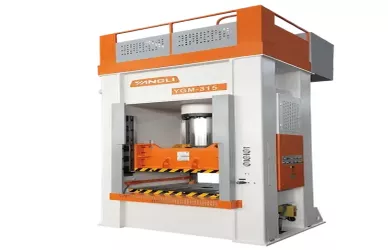
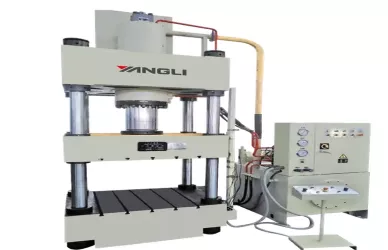
Understanding The Hydraulic Press: Power, Precision, And Performance
noviembre 20, 2025
The hydraulic press stands as a cornerstone of modern manufacturing, providing unmatched force and control across various industries. As technology evolves, understanding the capabilities and nuances of the hydraulic press becomes increasingly vital for manufacturers looking to optimize efficiency, output quality, and production scalability. This article explores what a hydraulic press is, how it works, its advantages over electric alternatives, and why YangLi continues to be a trusted name in this technology-driven space.
What Is a Hydraulic Press?
A hydraulic press is a machine that uses a hydraulic cylinder to generate a compressive force. It operates on the principle of Pascal’s Law, which states that pressure applied to a confined fluid is transmitted uniformly in all directions. In simpler terms, a small force applied at one end of a fluid-filled system can generate a much larger force at the other end. This foundational principle is what allows hydraulic presses to deliver the high tonnage required in heavy-duty applications.
The hydraulic press is used in various applications, including:
- Metal forming and stamping
- Deep drawing
- Molding plastic and rubber
- Powder compacting
- Baling and compaction
- Automotive component manufacturing
Unlike mechanical presses, hydraulic systems apply consistent force throughout the stroke, ensuring uniformity and accuracy even on intricate components. This makes them particularly suitable for industries requiring precision and repeatability.
How Does a Hydraulic Press Work?
The working mechanism of a hydraulic press involves several key components: a hydraulic cylinder, a pump, valves, and a reservoir. Here’s a breakdown of its operation:
- Pump Activation: A hydraulic pump moves fluid (usually oil) from the reservoir to the cylinder.
- Cylinder Movement: As fluid enters the cylinder, pressure builds up and pushes the piston down, applying force to the workpiece.
- Controlled Pressure: The flow of hydraulic fluid is regulated via valves to control the speed and force of the operation.
- Return Stroke: Once the pressing cycle is complete, fluid is released or rerouted, allowing the piston to retract.
Advanced control systems integrated into machines by YangLi ensure precision at every stage, offering programmable logic controllers (PLCs) and human-machine interfaces (HMIs) that enhance usability and safety.
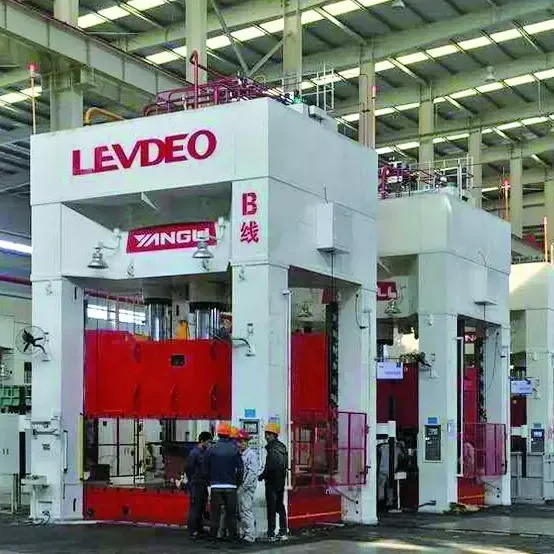
Hydraulic Press vs. Electric Press: Which Is Better?
With technological advancements, electric presses have gained traction. However, the comparison is far from one-sided. The hydraulic press retains several key advantages that make it superior in many industrial settings.
| Feature | Hydraulic Press | Electric Press |
|---|---|---|
| Force Capacity | High tonnage, suitable for heavy-duty | Limited force output |
| Stroke Control | Full force through entire stroke | Force drops at stroke end |
| Application Range | Versatile: metals, plastics, composites | Primarily used in light-duty operations |
| Initial Cost | Lower | Higher |
| Maintenance | More intensive (fluid checks) | Lower (fewer moving parts) |
| Customization Flexibility | High, suited for complex parts | Less customizable |
For tasks requiring substantial force, deep draw forming, or large component shaping, the hydraulic press clearly outperforms. YangLi has capitalized on this advantage, producing hydraulic systems that seamlessly combine brute strength with intelligent control systems.
Benefits of Choosing a Hydraulic Press
A hydraulic press offers several practical and economic advantages that make it a preferred choice in multiple sectors:
1. High Force Output with Compact Size
Hydraulic presses can deliver massive force in a relatively small machine footprint. This compact design saves valuable floor space and improves production line efficiency.
2. Consistent Pressure Application
Unlike mechanical presses, hydraulic models apply constant force throughout the stroke. This feature is crucial in maintaining uniform product quality, especially in operations like deep drawing or coining.
3. Adjustable Parameters
Hydraulic systems allow for easy adjustments in pressure, stroke length, and speed. This adaptability makes it easier to handle various materials and part geometries without major tooling changes.
4. Lower Tooling Costs
Because hydraulic presses apply pressure slowly and uniformly, they place less stress on tooling. This translates to longer die life and reduced replacement costs.
5. Enhanced Safety Features
Leading brands like YangLi integrate advanced safety features into their hydraulic systems, such as light curtains, overload protection, and emergency stop mechanisms, ensuring compliance with global safety standards.
Real-World Applications of Hydraulic Presses
The hydraulic press is the unsung hero behind many of the components we encounter daily. Below are a few industries and their applications:
Automotive Industry
- Chassis and structural part forming
- Bumper stamping
- Clutch and brake pad molding
Aerospace Industry
- Aircraft skin panel forming
- Landing gear component shaping
Consumer Goods Manufacturing
- Kitchenware pressing
- Home appliance panel molding
Construction Equipment
- Hydraulic component housing
- Earth-moving part fabrication
Manufacturers around the globe trust brands like YangLi to supply high-performance presses capable of meeting rigorous production demands.
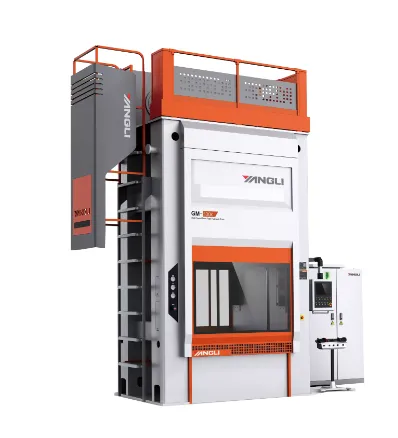
Key Considerations When Buying a Hydraulic Press
Choosing the right hydraulic press involves more than just comparing tonnage. Several factors must be evaluated to match the press with the intended application.
Tonnage Requirements
Analyze the material type and thickness to determine the force needed. Over-specifying leads to unnecessary cost; under-specifying can compromise safety and performance.
Bed Size and Stroke Length
Ensure the press dimensions suit the size of your workpieces and allow room for die operations.
Type of Operation
Whether you require a C-frame, H-frame, or four-column press depends on the application’s complexity, loading requirements, and available space.
Control System
Look for programmable systems that support production data logging, remote monitoring, and fault diagnosis. YangLi offers advanced PLC-controlled units for seamless automation integration.
Maintenance and After-Sales Service
A hydraulic press requires periodic maintenance. Choose a supplier that offers strong technical support and spare parts availability—another area where YangLi excels.
Frequently Asked Questions (FAQ)
Q1: How long does a hydraulic press last?
With proper maintenance, a quality hydraulic press can last 20 years or more. Regular inspection of seals, fluid levels, and valves is key to longevity.
Q2: What hydraulic fluid should be used?
Most presses use mineral-based hydraulic oil with anti-wear additives. Always consult your machine’s manual or contact YangLi for approved fluid specifications.
Q3: Can a hydraulic press be used for precision tasks?
Absolutely. With proportional valve control and PLC integration, modern hydraulic presses like those from YangLi are highly accurate and suitable for delicate operations.
Q4: Is a hydraulic press environmentally friendly?
Yes, newer models are designed to minimize fluid leakage and energy consumption. YangLi offers energy-efficient systems with smart idle modes and variable-speed pumps.
Why YangLi Is a Trusted Name in Hydraulic Presses
With decades of engineering expertise, YangLi has established itself as a leader in hydraulic press technology. Their machines are known for:
- Exceptional build quality
- High tonnage capacity
- Advanced control systems
- Custom engineering for industry-specific needs
Whether you’re operating a small manufacturing line or a large industrial facility, YangLi delivers hydraulic press solutions that drive productivity, ensure quality, and reduce long-term operational costs.
Their product range spans from small tonnage workshop presses to large-scale deep drawing machines, all backed by comprehensive customer support and global service networks.
Conclusion
The hydraulic press remains an indispensable tool in modern manufacturing, bridging the gap between raw material and finished product with unmatched force, control, and versatility. While electric presses have carved out a niche in specific applications, hydraulic technology still holds dominance where power, consistency, and adaptability are essential.
For manufacturers seeking long-term performance, flexibility, and safety, investing in a high-quality hydraulic press from a reliable brand like YangLi is a strategic choice that pays dividends over time.