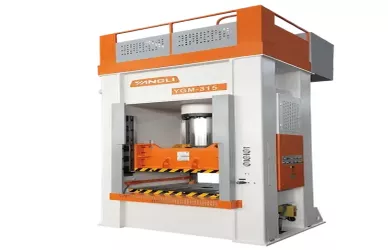
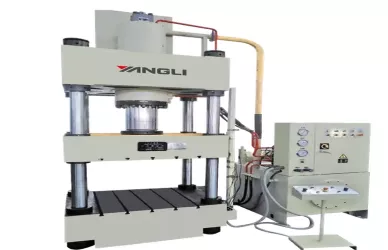
The Ultimate Guide to Hydraulic Press
noviembre 20, 2025
Hydraulic presses have become indispensable machines across modern industries, offering precision, power, and versatility for metalworking, automotive, aerospace, and even consumer goods production. If you’re exploring heavy-duty forming machinery or seeking advanced pressing technology, understanding the core mechanics and capabilities of a hydraulic press is essential.
Among numerous manufacturers in the global market, YangLi stands out with its dedication to engineering excellence and precision-manufacturing solutions for industrial automation. This article delves deep into what a hydraulic press is, how it functions, why it’s widely adopted, and how YangLi is setting new benchmarks.
What is a Hydraulic Press?
A hydraulic press is a machine that uses a hydraulic cylinder to generate a compressive force. It functions based on Pascal’s law, which states that when pressure is applied to a confined fluid, it transmits that pressure equally in all directions. This principle allows the hydraulic press to multiply force efficiently, making it ideal for tasks requiring immense pressure, such as forming, molding, blanking, punching, and deep drawing.
Unlike mechanical presses that rely on flywheels and cranks, a hydraulic press offers smoother control over pressure and speed. The core components typically include:
- Hydraulic cylinder
- Pump
- Valves and hoses
- Frame structure
- Control panel
With these elements, a hydraulic press can apply anywhere from a few tons to several thousand tons of pressure, making it suitable for everything from plastic molding to forging airplane parts.
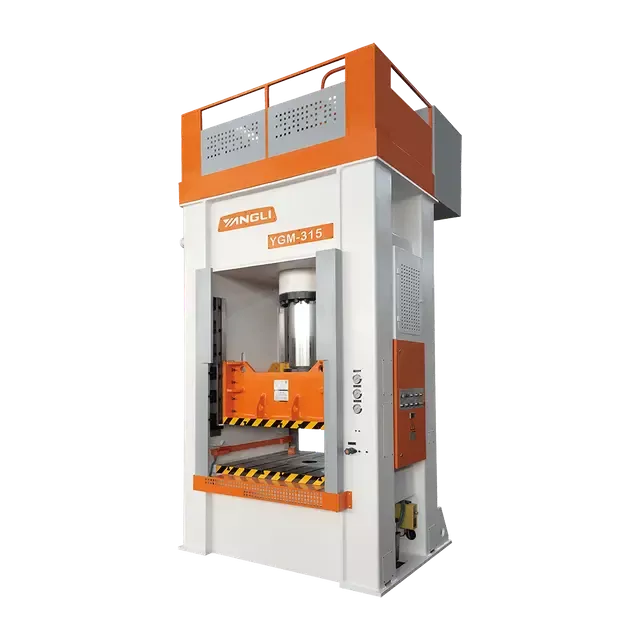
Key Features and Benefits of Hydraulic Press Machines
When evaluating hydraulic presses, one must consider not only their raw force but also their operational benefits. Here’s a breakdown of the major features and why industries are moving toward hydraulic systems—especially those designed by YangLi.
Force Consistency and Control
Hydraulic presses can maintain uniform pressure throughout the stroke, allowing for precise and repeatable results. Whether forming complex metal parts or compacting powders, the consistency ensures minimal material waste and maximum accuracy.
Versatility Across Applications
From automotive part assembly to plastic forming, a hydraulic press can adapt to various operations with interchangeable dies and programmable settings. The modularity in YangLi machines provides unmatched flexibility.
Safety and Automation
Modern presses, including YangLi models, integrate advanced safety features such as light curtains, two-hand controls, overload protection, and programmable logic controllers (PLCs). These reduce operational hazards while enhancing productivity.
Cost-Efficiency
Though initial costs may seem high, hydraulic presses are known for their low operating and maintenance costs. They use fewer moving parts compared to mechanical alternatives, which results in reduced downtime and repair.
Applications of Hydraulic Press in Manufacturing Industries
Hydraulic presses are central to a wide range of sectors, where forming or reshaping materials is critical. Here’s how different industries utilize this robust technology.
| Industry | Application | Benefits |
|---|---|---|
| Automotive | Body panel stamping, engine part forming | High precision and repeatability |
| Aerospace | Wing spars, turbine blade shaping | Supports high-strength alloys |
| Electronics | Circuit board laminating, battery cell forming | Compact form factor compatibility |
| Packaging | Carton compaction, plastic shaping | Reduces waste, improves efficiency |
| Furniture | Metal frame bending, wood embossing | Enhances aesthetic and structural quality |
A well-optimized press like those offered by YangLi ensures superior cycle time, energy efficiency, and consistent results across all these domains.
How Does a Hydraulic Press Work? A Technical Breakdown
To understand a hydraulic press’s operation, let’s explore the flow of energy and pressure from start to finish:
- Hydraulic Fluid Reservoir – Stores the pressurized fluid (typically oil).
- Pump Activation – Motor drives a pump that sends fluid through hoses.
- Control Valve Management – Directional control valves route the fluid to the hydraulic cylinder.
- Ram Movement – The fluid pushes the piston/ram down, exerting compressive force on the workpiece.
- Return Stroke – Releasing the pressure allows the ram to retract.
The entire process is coordinated through sensors, limit switches, and increasingly through smart software integrations, which YangLi machines have adopted to improve real-time diagnostics and adaptive control.
Why Choose YangLi Hydraulic Presses?
With a legacy of innovation and quality, YangLi has positioned itself as a leader in hydraulic press manufacturing. Here are a few reasons why manufacturers trust YangLi:
Advanced Engineering and Design
YangLi invests heavily in R&D to produce presses that support high tonnage without compromising on speed or accuracy. Their heavy-frame construction ensures rigidity and durability even under extreme loads.
Customization and Modularity
Each industry has unique requirements. YangLi provides tailored solutions—whether you need a single-column press, H-frame, or multi-action press, their product range meets varied specifications.
Digital Integration
Industry 4.0 demands connectivity and intelligence. YangLi hydraulic presses support SCADA systems, IoT-based diagnostics, and cloud monitoring. This ensures maximum uptime and predictive maintenance.
Global Support Network
With a strong distribution and service network, YangLi offers rapid response times, spare part availability, and operator training globally. This reduces downtime and ensures production continuity.
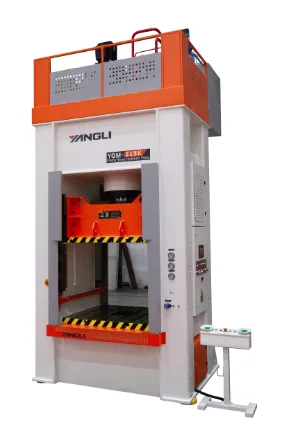
Frequently Asked Questions (FAQ)
What types of hydraulic presses are available?
Common types include:
- C-frame presses – Compact, used for light assembly.
- H-frame presses – Heavy-duty applications.
- Four-post presses – For balanced force distribution.
- Servo-hydraulic presses – Offer precise force and position control.
YangLi offers all these variations with optional configurations.
How do I determine the right tonnage for my application?
Consider the material type, thickness, size, and the forming process. Use tonnage calculation formulas or consult YangLi’s technical team for exact specifications.
How often should a hydraulic press be maintained?
Routine inspection every 3–6 months is recommended. Key areas include:
- Hydraulic fluid level and cleanliness
- Cylinder and seal wear
- Hose integrity
- Electrical system health
Can a hydraulic press be used for multi-stage operations?
Yes, especially servo-hydraulic or multi-action presses by YangLi. These systems allow sequential operations like bending, punching, and coining in one cycle.
Future Trends in Hydraulic Press Technology
As global manufacturing evolves, so does press technology. Here’s where the industry is heading—and how YangLi stays ahead of the curve.
Electrification and Servo Systems
Hybrid systems combining hydraulics with electric drives are gaining traction. They provide energy efficiency and noise reduction. YangLi’s servo-hydraulic range is designed with these advancements in mind.
Smart Manufacturing Integration
Real-time data tracking, remote operation, and cloud storage are now being embedded into hydraulic systems. These innovations offer manufacturers a competitive edge through improved efficiency and traceability.
Sustainable Operations
Eco-friendly hydraulic fluids, regenerative circuits, and energy-saving modes are now standard in premium machines. YangLi ensures compliance with international green manufacturing standards.
Conclusion: Invest in Precision with YangLi Hydraulic Press
The hydraulic press remains a cornerstone of modern production—its power, precision, and adaptability make it the preferred choice across industries. Whether you’re building auto parts, aerospace components, or electrical housings, the right press will determine your product’s consistency and profitability.
YangLi brings together cutting-edge innovation, durable engineering, and global support to offer hydraulic presses that redefine performance standards. By investing in a YangLi hydraulic press, you’re not just purchasing a machine—you’re acquiring a scalable solution for long-term manufacturing success.